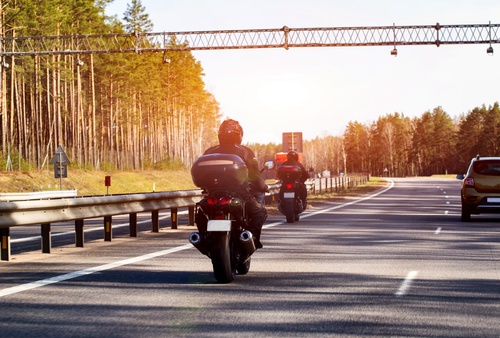
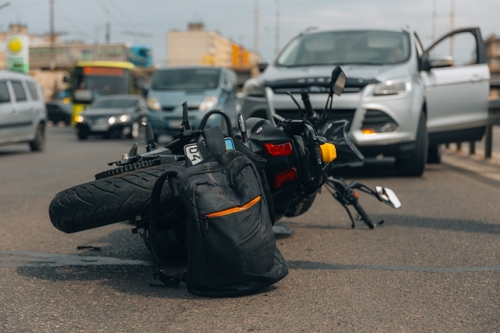
Lane splitting is not permitted under Illinois law. However, a lane-splitting allegation does not automatically prevent an injured rider from pursuing a claim, because fault depends on the specific facts of the collision.
At Duncan Law Group, our motorcycle accident attorneys help Chicago motorcyclists understand how lane splitting affects fault and liability after an accident. If you were injured in a motorcycle crash and lane splitting is being raised as an issue in your case, call (312) 202-3283 to talk with our team.
What Is Lane Splitting?
Lane splitting refers to a motorcycle riding between two lanes of traffic, passing between vehicles traveling in adjacent lanes, typically in slow-moving or stopped traffic.
Illinois's prohibition on lane splitting applies statewide. Whether the collision occurred on the Kennedy, the Dan Ryan, Lake Shore Drive, or a congested Chicago neighborhood street, the same statewide rule applies.
Lane Splitting vs. Lane Filtering vs. Lane Sharing
People sometimes use these terms interchangeably, but they generally describe different riding maneuvers. The distinction can matter when evaluating the facts of a crash, even though Illinois law does not create a separate exception for lane filtering.
Lane Filtering Is Also Not Permitted
Illinois law does not create a separate exception for lane filtering. Even at low speeds or when traffic is stopped, riding between rows of vehicles is not permitted.
When Can Motorcycles Ride Side by Side?
Illinois law allows two motorcycles to ride side by side in a single lane. This is different from riding between separate lanes of traffic or between rows of vehicles. Motorcycles may not ride more than two abreast in a single lane.
This lawful side-by-side riding shouldn't be confused with the prohibited maneuvers discussed above.
How Lane Splitting Can Affect Fault in a Motorcycle Accident
A rider who was lane splitting at the time of a crash may still have a valid injury claim. A lane-splitting violation may be considered when fault is evaluated, but it is not conclusive proof that the rider caused the crash. The facts surrounding both parties’ conduct still matter.
Illinois Modified Comparative Negligence Rule
Under Illinois’ modified comparative negligence rule, an injured person may generally recover damages if their share of fault is 50% or less. Any damages awarded are reduced by that person’s percentage of fault. Recovery is barred only when the injured person is found more than 50% at fault.
How Insurance Companies May Try to Shift Blame
Insurance companies may point to a lane-splitting allegation when arguing that a motorcyclist shares substantial responsibility for the collision. A careful investigation can help determine whether that allegation reflects what actually caused the crash.
Evidence That Can Help Establish Liability
The evidence in a lane-splitting motorcycle crash can be critical to showing how both the rider’s actions and the other driver’s negligence contributed to the collision. Evidence can help show how the crash occurred, whether the other driver acted negligently, and whether the rider’s actions actually contributed to the collision.
Traffic-Camera, Dashcam, and Surveillance Footage
Several sources of video evidence can help establish exactly what happened leading up to the crash:
- Traffic camera footage from the intersection or roadway
- Dashcam footage from any of the vehicles involved
- Helmet-camera footage, if the rider was using one
- Nearby business or residential surveillance video
- Rideshare or delivery vehicle dashcam footage, if one of those vehicles was involved
Police Reports, Witness Statements, and Crash Reconstruction
Beyond video evidence, several other sources can help piece together a more complete and accurate picture of fault:
- The official police report documenting the scene and any citations issued
- Statements from witnesses who saw the crash
- Cell phone records, if driver distraction is suspected
- Vehicle damage patterns from both the motorcycle and the other vehicle
- Crash reconstruction analysis, in more serious cases
- Medical records documenting the rider's injuries and their consistency with how the crash occurred
Examples of Driver Negligence That May Still Matter
Even when a rider was lane splitting, a driver's own negligence can still play a significant role in causing a crash, including:
- Changing lanes without checking mirrors or blind spots
- Opening a car door into traffic
- Following too closely
- Driving while distracted
- Failing to yield the right of way
Depending on the facts, these actions may support a finding that the driver shared responsibility for the collision.
What To Do After a Lane-Splitting Motorcycle Accident
- Call 911 and report the crash: Request police and emergency medical assistance, especially when someone is injured, vehicles are damaged, or traffic conditions create an immediate safety risk. An officer’s report may also document important details from the scene.
- Get medical attention and document the crash: Seek prompt medical attention, even if your injuries seem minor at first, and document the crash scene, your motorcycle's damage, and the other vehicle's damage if you're able to do so safely.
- Gather witness information: Get contact information for anyone who saw the crash, since an independent witness account can help establish what actually happened, particularly in a case where fault is likely to be disputed.
- Be careful when speaking with insurance companies: Provide necessary basic information, but avoid speculating about fault or agreeing to a recorded statement before you understand your rights. Statements made soon after a crash may later be used in a dispute over responsibility.
- Preserve available video evidence: Save any helmet-camera or dashcam footage from your motorcycle. If nearby businesses, residences, or vehicles may have captured the collision, act quickly to identify the footage and request that it be preserved before it is overwritten.
- Speak with a Chicago motorcycle accident lawyer: An attorney can review the available evidence, explain how Illinois comparative negligence rules may apply, and communicate with insurers on your behalf. Call Duncan Law Group at (312) 202-3283 for a free consultation.
Contact Duncan Law Group for Help After a Motorcycle Crash
A lane-splitting allegation does not automatically relieve another driver of responsibility for a motorcycle crash. Duncan Law Group can investigate the collision, review available evidence, and evaluate whether the other driver’s conduct contributed to your injuries.
Led by Attorney Robert Duncan, Duncan Law Group represents injured motorcyclists throughout the Chicago area. Our firm approaches every case with careful preparation, direct communication, and a focus on the facts that matter.
If you were hurt in a Chicago motorcycle accident, a car accident, or another collision caused by negligence, call (312) 202-3283 for a free and confidential consultation. You can also contact Duncan Law Group online to discuss your case.