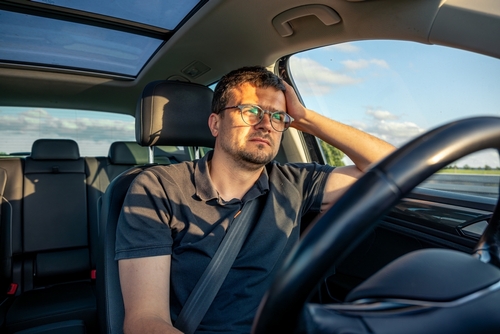
Highway hypnosis is a state in which a driver continues to steer, brake, and stay on course while losing track of time and retaining little memory of part of the trip. Many drivers have arrived home after a familiar commute and realized they can’t recall the last several miles. The experience is common, but when it overlaps with fatigue or inattention, a driver may be slow to notice changing traffic, and that can lead to serious crashes.
At Duncan Law Group, we help people throughout Chicago and across Illinois who have been hurt by drivers who weren’t paying proper attention to the road. Contact Duncan Law Group at (312) 202-3283 for a free consultation.
Why Drivers May Not Remember Part of a Trip
Familiar driving tasks can become automatic, and a driver may later have little clear memory of parts of the trip. According to the Cleveland Clinic, highway hypnosis is defined mainly by a lost sense of time, and drivers often don’t realize it happened until they snap out of it. Missing memory alone does not establish that a driver was asleep, distracted, or driving unsafely.
What Causes Highway Hypnosis?
Highway hypnosis tends to develop when the driving environment asks very little of the driver for a long stretch. Driving the same route every day makes the trip automatic, which raises the likelihood of highway hypnosis. Highway hypnosis and fatigue share a common trigger in long, monotonous driving.
Research suggests that predictable highway environments can contribute to reduced driver alertness. For drivers around Chicago, long trips on I-55, I-80, and I-88 provide a local context for this concern, particularly when traffic and scenery remain relatively unchanged. Cruise control may also increase the risk of highway hypnosis.
Is Highway Hypnosis the Same as Drowsy or Distracted Driving?
No. The Cleveland Clinic distinguishes highway hypnosis from both drowsy driving and distracted driving, even though all three can happen on the same trip.
Drowsy Driving
Drowsy driving involves physical sleepiness that slows reaction time, impairs judgment, and can lead to brief episodes of falling asleep at the wheel. Highway hypnosis does not necessarily involve sleepiness. Cleveland Clinic notes that it may involve increased automatic attention without a change in reaction time. The two become hard to separate when a tired driver also slips into autopilot, which is why fatigue deserves serious attention on any long drive.
Distracted Driving
Distracted driving involves attention being diverted from driving, such as by a phone, a conversation with a passenger, or a navigation screen. Distraction can take a driver’s eyes off the road, hands off the wheel, or mind off driving. Highway hypnosis, by contrast, can occur during familiar or monotonous driving without another activity pulling the driver’s attention away.
What Warning Signs Mean You Should Stop Driving?
Some signs suggest you have been driving on autopilot, while others point to fatigue.
If you can’t remember the last few miles, miss your exit, or feel surprised by how much time has passed, you may not be fully engaged with the road. Rather than continuing on autopilot, find a safe place to pull over.
Frequent yawning, heavy eyelids, trouble keeping your head up, drifting out of your lane, and hitting rumble strips are warning signs of fatigue, not defining features of highway hypnosis. If these symptoms appear, stop driving and rest. Opening a window is not a substitute for the sleep your body needs.
How Can Fatigue and Inattention Contribute to Highway Crashes?
Drowsy driving is a documented safety problem. The National Highway Traffic Safety Administration reported 633 deaths in crashes involving drowsy drivers in 2023. A 2026 Governors Highway Safety Association report estimated that more than 6,300 deaths may have involved drowsy driving, applying earlier research to 2023 fatality data. The report explains that drowsiness is difficult to identify after a crash and is undercounted in police-reported data.
These figures measure drowsy driving, not highway hypnosis specifically, but they show how dangerous reduced alertness can be.
Delayed Reactions to Traffic and Road Hazards
A fatigued or inattentive driver may be slow to notice debris, a stalled vehicle, a construction zone, or a pedestrian. At highway speeds, even a brief delay covers a long distance before the driver brakes or steers away.
Lane Departures and Failure to Notice Slowing Vehicles
Fatigue-related crashes often involve a vehicle drifting across lanes or off the road, or rear-ending traffic that slowed ahead. Investigators may examine braking data alongside other evidence, but a lack of braking alone does not establish fatigue or inattention.
Who May Be Liable When a Fatigued Driver Causes an Illinois Accident?
Under Illinois law, every driver owes others a duty of reasonable care. A driver who causes a crash by failing to stay alert, keep a proper lookout, or stay in their lane may be liable for the resulting injuries. If the driver was an employee acting within the scope of employment when the crash occurred, the employer may also be liable.
Proving Unsafe Driving and Its Connection to the Crash
A claim doesn’t succeed just because a driver admits they don’t remember the moments before impact. The focus is on provable conduct, such as crossing the center line, following too closely, or failing to slow for traffic, and on showing that this conduct caused the crash and your injuries. Evidence of fatigue helps explain why the driver acted unsafely.
Evidence That May Support a Fatigued-Driving Claim
Useful evidence can include the police report, witness statements, dashcam or traffic camera footage, vehicle data showing speed and braking, phone records, and the driver’s work schedule. In truck accident cases, federal hours-of-service rules limit how long commercial drivers can operate, and electronic logs can show whether a driver exceeded those limits.
Compensation Available After a Negligence Related Crash
Injured people in Illinois may recover compensation for medical bills, lost wages, reduced earning capacity, pain and suffering, disfigurement, loss of a normal life, and property damage.
Illinois follows modified comparative fault, so you can recover as long as you were not more than 50% at fault, with your award reduced by your share of responsibility. You generally have two years from the date of injury to file a personal injury lawsuit, although exceptions and different deadlines may apply.
How Can Drivers Reduce the Risks of Fatigue and Inattention?
The best defense is breaking up monotony and respecting your body’s need for rest. Get a full night’s sleep before long trips, and plan stops every couple of hours. Varying your attention helps too, such as reading exit signs aloud, checking your speed regularly, or switching off cruise control on familiar stretches. If you feel drowsy, pull over at a safe location and stop driving. Opening a window is not an effective remedy, and caffeine offers only temporary help. Do not resume driving until you are sufficiently rested, or arrange for someone else to drive.
Get Help After a Crash Caused by an Inattentive or Fatigued Driver
At Duncan Law Group, our Chicago trial lawyers have more than 100 years of combined experience helping injured people across Illinois. When someone is hurt in a car accident caused by an inattentive or fatigued driver, we take on the heavy lifting, investigating the crash, gathering the evidence that shows what the other driver did wrong, and handling negotiations with insurers. If a fair settlement isn’t offered, we are ready to take your case to court.
We come to you, and you pay no attorney fees unless we win. With offices in Chicago, Oak Brook, and Moline, we serve clients throughout the state.
Contact Duncan Law Group at (312) 202-3283 to talk about your case.