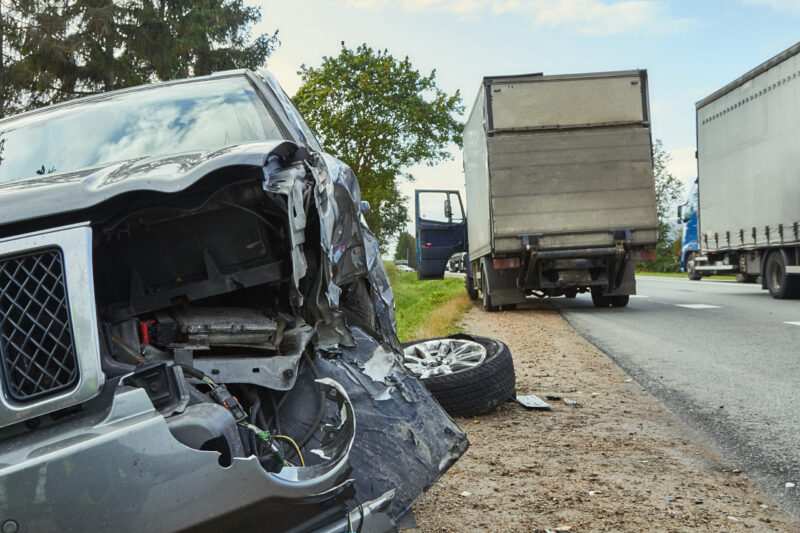
There’s no single answer to how much your insurance will go up after an accident. An at-fault crash may increase your premium, while a not-at-fault accident may or may not affect it. Insurers treat accidents differently, so ask how the crash will be rated on your specific policy.
Premium increases and the value of an injury claim are separate issues. If you were hurt in a crash, the attorneys at Duncan Law Group can help you pursue compensation from the at-fault driver while you sort out your insurance questions. Call (312) 202-3283 for a free consultation.
Why Do Insurance Rates Go Up After a Crash?
Insurers set premiums based on how likely they think you are to file future claims and how costly those claims might be. An accident can change that assessment.
Fault, Claim Costs, and Your Driving History
Whether you caused the crash is an important factor in how an insurer evaluates the accident. Insurers commonly treat an at-fault accident as a sign of higher future risk. Insurers may also consider the amount paid on the claim, along with your prior accidents and violations. A first accident after years of clean driving may affect your rate differently than a second accident or one combined with traffic tickets.
Accident Surcharges and Lost Discounts
An at-fault accident may lead to an accident surcharge, increasing your premium for several years. The amount and duration depend on your insurer and applicable state rules. An accident or claim may also cause you to lose a safe driver or claim free discount, which can raise your premium. Ask your insurer whether the accident will trigger a surcharge, affect your discounts, or change your premium at renewal.
Will Insurance Go Up After an Accident That Was Not Your Fault?
It can, although insurers do not all treat not-at-fault accidents the same way. A 2017 Consumer Federation of America study compared quotes from five major insurers across 10 cities and found that some increased premiums after a not-at-fault accident while others did not. Chicago was among the markets where increases appeared. Because the study examined historical quotes, its findings do not establish how a particular insurer will rate your policy today.
Will My Insurance Increase After a Claim?
Not every interaction with your insurer has the same effect on your rates.
Reporting an Accident vs. Requesting Payment
Most policies require you to report accidents promptly, even if you don’t plan to file a claim. Reporting an accident is different from asking your insurer to pay for damages or injuries. Failing to report an accident when your policy requires it can create coverage problems later, so follow your policy’s reporting requirements.
Using Your Own Coverage vs. the Other Driver’s Insurance
Illinois is an at-fault state, so the driver who caused the crash is generally responsible for the damages, usually through their liability insurance. A claim against the other driver’s liability insurance is different from a claim under your own policy. However, you should not assume that pursuing the other driver’s insurer guarantees your own premium will remain unchanged.
Depending on the circumstances and your policy, you may have coverage through collision, medical payments, or uninsured motorist insurance. These coverages serve different purposes and have different requirements. Ask your insurer how a claim under the applicable coverage could affect your premium.
If you were injured and need help understanding your compensation options, call Duncan Law Group at (312) 202-3283 for a free consultation.
When Will an Insurance Increase Start, and How Long Can It Last?
Accident-related premium increases generally appear at your next policy renewal rather than in the middle of your policy term. An accident may affect your insurance rates for three to five years, depending on your insurer and state rules. However, the surcharge period and any reduction over time vary, so you should not assume the accident-related charge will decrease each year.
Illinois enacted auto insurance reform legislation in 2026 that strengthens state oversight of insurance rates, with provisions taking effect July 1, 2027. For renewal premium notices sent on or after that date, insurers must provide at least 30 days’ notice before a renewal premium increase of more than 10%.
How Accident Forgiveness May Affect Your Rate
Accident forgiveness may protect you from an accident-related increase after a qualifying at-fault crash. Eligibility, exclusions, and the treatment of discounts depend on the insurer’s program.
Should You File a Claim if Your Insurance Might Go Up?
For minor vehicle damage, some drivers compare the repair cost with their deductible and the potential premium impact before deciding whether to file a first-party claim. Choosing not to request payment does not necessarily eliminate your obligation to report the accident under your policy.
If you were injured, consider the full extent of your losses rather than making a claim decision based only on a possible premium increase.
An attorney can help you pursue compensation from the at-fault driver but can’t control how your insurer sets your premium.
What Can You Do if Your Premium Increases?
If your premium goes up after an accident, take these steps:
- Review your renewal notice: Look for any surcharge, lost discount, or other changes.
- Ask your insurer to explain the increase: Request details about how the accident was rated.
- Check the accident information: Make sure the date, fault determination, and claim details are accurate.
- Compare equivalent coverage: Get quotes from other insurers for the same limits and deductibles.
Challenging an incorrect fault determination is different from disputing how an insurer prices your policy. If the insurer has the facts wrong, you can provide documentation, such as a police report or the other insurer’s liability decision. Pricing decisions are generally up to the insurer within applicable rules. Keep in mind that switching insurers doesn’t automatically remove an accident from your history, since other companies may consider it when quoting your rate.
For more guidance, read our article on how to handle insurance companies after a car accident in Chicago.
How Duncan Law Group Can Help With Your Car Accident Claim
If you were injured in a crash, insurance questions are only part of the picture. Led by attorney Robert R. Duncan, Duncan Law Group brings more than 100 years of combined legal experience and has recovered hundreds of millions of dollars for injured people and their families. Our car accident attorneys can deal with the at-fault driver’s insurer, document your injuries and losses, and pursue fair compensation while you focus on recovery.
No outcome can be guaranteed, and there are no attorney fees unless we recover compensation for you. Contact Duncan Law Group at (312) 202-3283 for a free consultation.